Kids' Rooms · July 4, 2026
The Kids' Room That Says Nothing About Gender — and Everything About Your Kid
Pink-for-girls and blue-for-boys is a 1980s marketing decision, not biology. Here's what the research actually says about kids and colour, and how I'd build a room that gives a child room to grow.
You've stood in a kids' section that looked like it was sponsored by either Barbie or a monster-truck rally. Wall of pink on one side, wall of blue on the other, and a small voice in the back of your head asking who decided this. That hyper-pink ceiling and that all-blue wall aren't only an aesthetic choice. They're a message, and kids absorb it.
Here's the honest version of what the research actually says, what I'd put in the room, and why the blue-and-pink rule you're pushing back against is younger than your grandmother.
Who decided pink meant girl and blue meant boy
Before we talk about rooms, we have to deal with the tiny pink elephant in this one.
Jo Paoletti, a historian at the University of Maryland, spent two decades studying how colour got attached to children's genders. Her finding: there was no universal rule until surprisingly recently. It only firmed up around the mid-20th century. And earlier than that, some guides argued the exact opposite. Pink, being close to commanding red, was considered the stronger colour and therefore for boys; blue, seen as delicate, was for girls.
So what locked in the version we all inherited? Prenatal testing in the mid-1980s. Once parents could learn a baby's sex before birth, manufacturers had a brand-new market to sell into, and a tidy colour split made it easy. As a historical overview in the British Columbia Medical Journal put it, the gendered colour code we treat as timeless really went mainstream once retailers realised it was profitable. A 1927 Time magazine chart even shows US stores recommending the reverse of today's rule.
The blue-and-pink split isn't a law of nature. It's a marketing decision that's younger than the microwave.
Worth sitting with the next time someone tells you "boys just like blue."
What the research says about kids and colour
This is where it gets useful, because the research does not say "paint it pink" or "paint it blue." It talks about mood, focus, and rest.
A study in the Journal of Applied Psychology found lighter blues have a measurable calming effect on children, linked to a lower heart rate and a settled, meditative feeling. That's not a boy benefit. It's a human one. I'll add the obvious caveat, since this is design and not medicine: treat these findings as a helpful steer, not a prescription. But the pattern across the studies is consistent enough to design around.
A few things come up again and again:
- Soft greens and sage reduce eye strain and read as balanced. Good for a desk or a study corner.
- Warm neutrals — beige, tan, soft greys — feel restful and content, and they work beautifully when siblings share a room.
- Muted yellow is one of the most reliably neutral options, tied to optimism and gentle energy. Push it to a bold or acidic yellow and it tips into overstimulation, so keep it soft.
A 2024 paper in the International Journal of Arts, Sciences and Social Studies on colour in children's bedrooms found colour to be one of the most influential elements in the whole room, because a bedroom is an intimate space that shapes how a child feels day to day. In its test environment, a pared-back green-and-white palette produced measurable calm. Separately, a 2024 study in Colour Research & Application found that designers working in paediatric spaces consistently chose pastels and neutrals over saturated primaries, prioritising comfort over drama.
The through-line is clear. The evidence doesn't support gendered colour rules. Calming blues, balanced greens, and warm neutrals help both girls and boys. The smart move is to choose colour for the emotional and developmental needs of the child in front of you, not for their sex.
Why a neutral room is the smarter investment
Interior designer Joyce Craveiro, writing for the American Academy of Interior Design, has noticed the same shift I have. Parents used to frame the request practically. Now they talk about wanting their girls to be active and inspired by nature, and their boys to feel free to play with dolls and build a caring side. The room becomes a way to widen a child's sense of what's allowed, not narrow it.
There's research underneath that instinct. A review in the Journal of Student Research looked at gender stereotyping across children's toys, media, books, and spaces and linked heavy stereotyping to real costs: anxiety, low mood, weaker academic performance, and limited self-expression. When a child's surroundings keep nudging them toward a prescribed role, it narrows what they believe they can become. I'd read that as a reason to keep the room open-ended, not as a diagnosis.
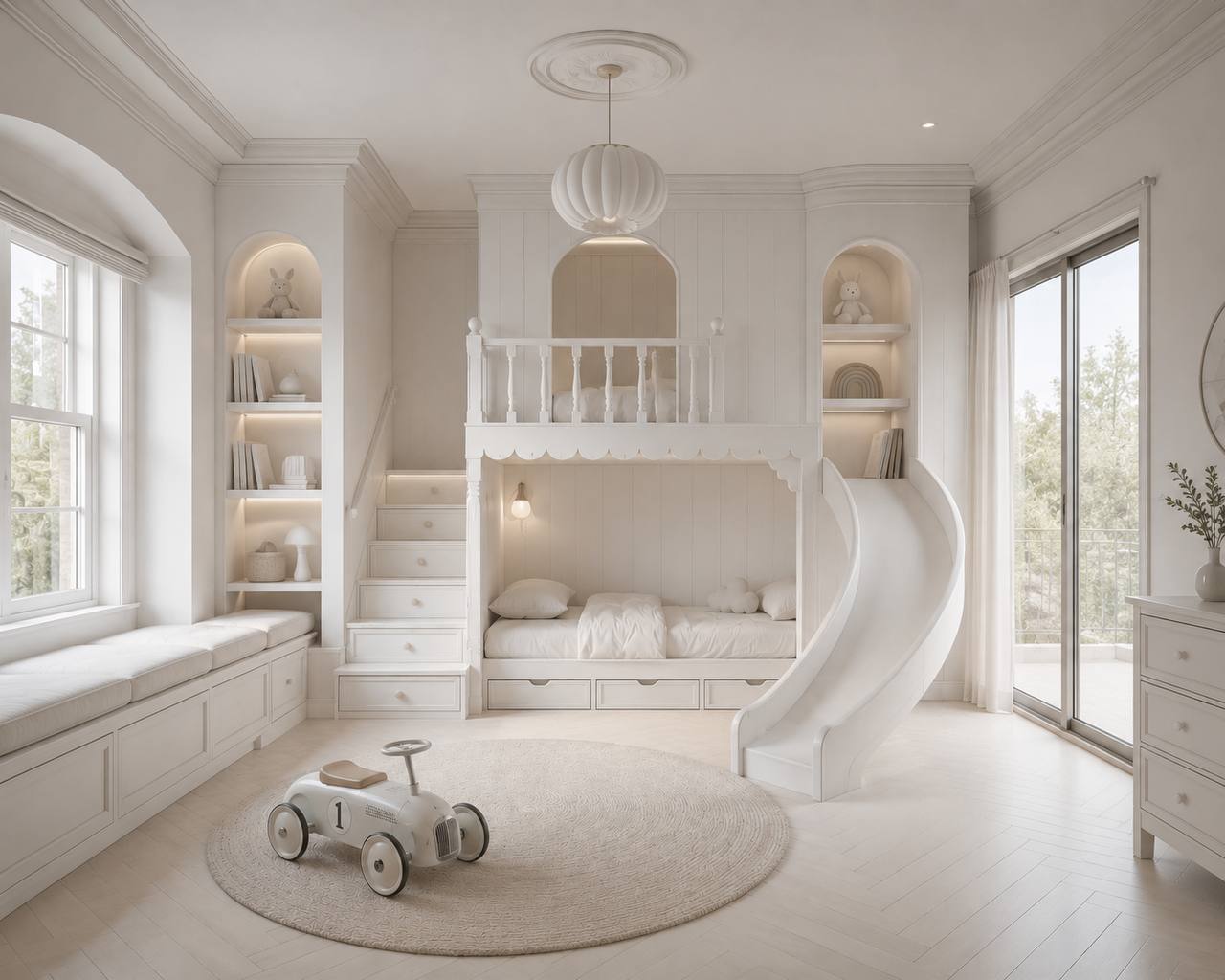
A neutral space doesn't tell a child who to be. It gives them room to work it out.
Then there's the plainly practical argument, the one I make to every parent watching their budget. Kids change fast. The unicorn phase lasts about six months. The dinosaur obsession, also temporary. A neutral base means you swap accessories, bedding, and prints as the child evolves, without repainting walls or replacing furniture. You spend once on the bones and keep changing the cheap layer. That's not a compromise. It's just smarter money.
The design breakdown: what I'd actually do
So what does a thoughtful gender-neutral room look like in practice? Here's where the design and child-development camps agree, and how I build it.
Start with a neutral base, then go bold with accents
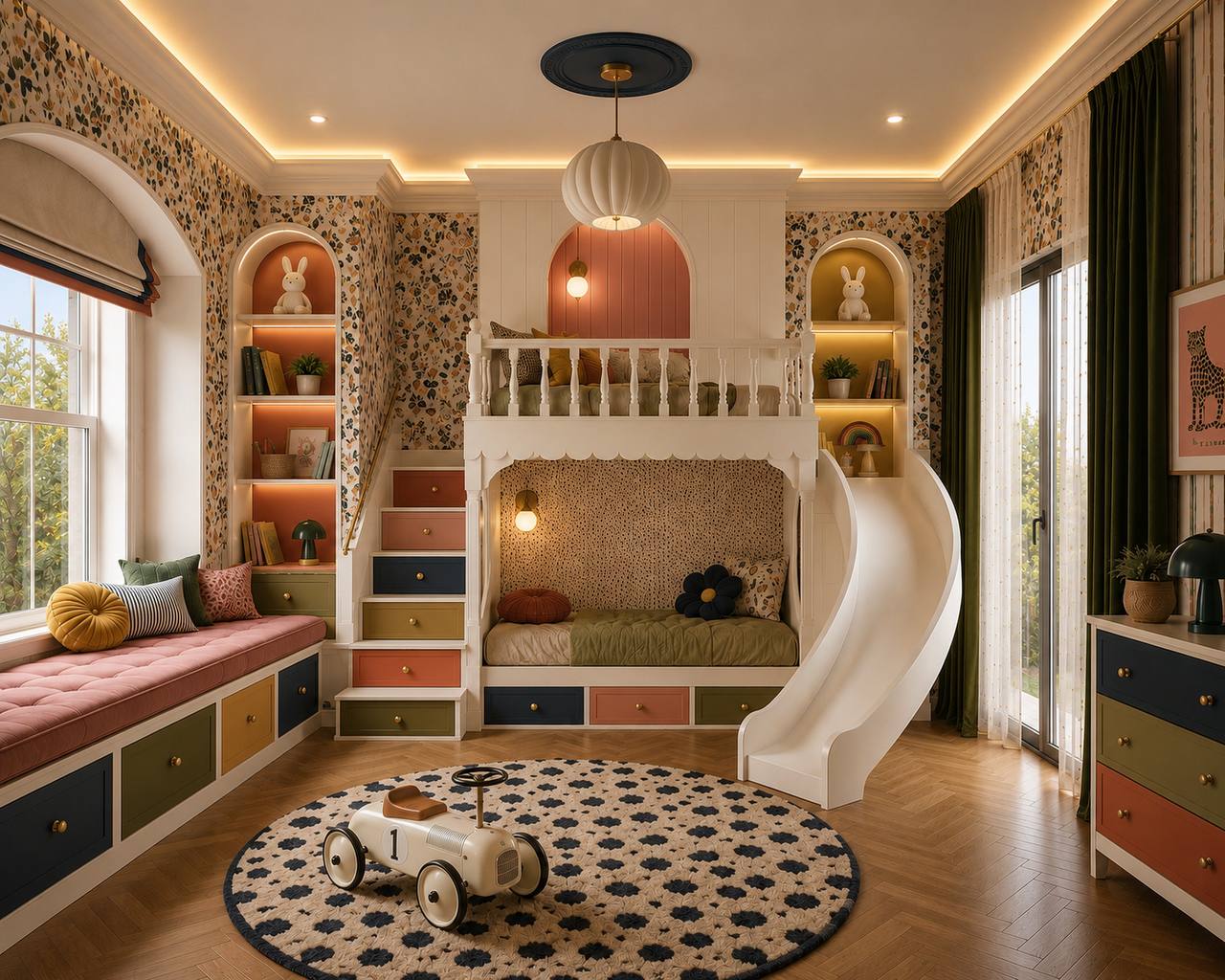
The approach I'd use is a layered palette. Pick a quiet foundation — warm white, soft grey, natural wood, an earthy green — and bring the personality in through things you can change in an afternoon: cushions, rugs, art, bedding, lamps. The Design Files makes the case for timber furniture as the anchor, because natural wood pairs with any scheme and grows with the child. A palette I keep reaching for this year is butter yellow, rust, and a muted blue: earthy, warm, and it reads well from toddler to teen.
The trap to avoid is the flat, dull "safe" beige that people reach for when they're scared of colour. Neutral doesn't mean absent. Use buttery neutrals and soft pastels as the backdrop, and let the child's actual favourite colour lead the accents.
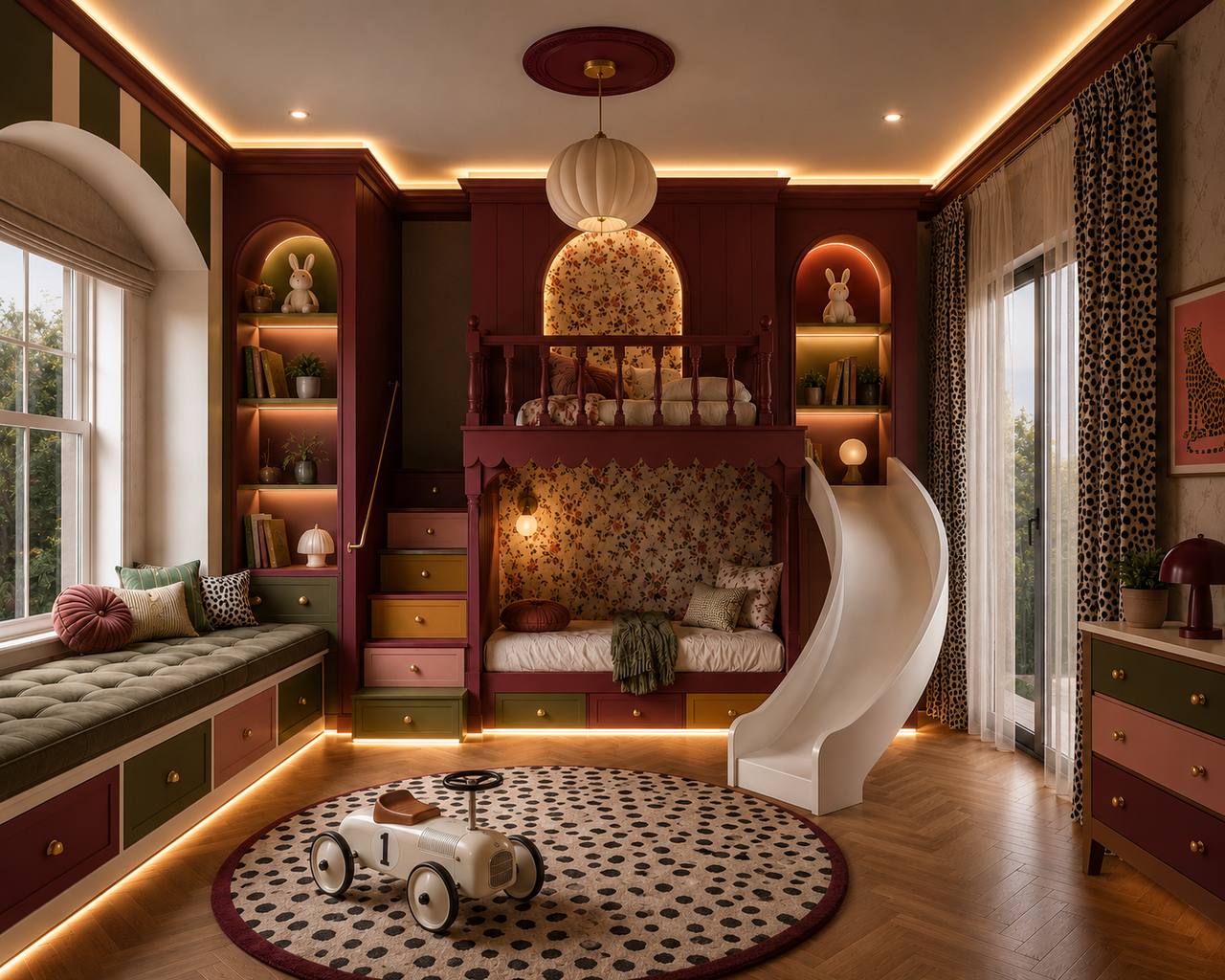
Bring nature in
One of the strongest directions in kids' rooms right now is biophilic design — pulling the natural world inside. Earthy tones (green, beige, terracotta), wooden furniture, woven rugs, cotton, and nature-led murals or wallpaper. It calms a room and sparks curiosity, which is exactly what you want where a small person sleeps, plays, and learns. It's also neutral by default. A forest doesn't have a gender, and neither does a sage-green wall.
Buy furniture that grows with the child
Kids' rooms aren't only bedrooms anymore. They're study zones, play spaces, reading nooks, sometimes all three before dinner. Modular pieces earn their place here: beds with built-in storage, adjustable desks, loft beds that free the floor below for play. The principle is simple. Buy for the next five years, not this year. Extendable beds and modular storage mean you're not starting over every time the child grows.
Layer the lighting
Lighting is where a lot of neutral rooms fall flat, going either too harsh or too nursery. Layer it instead: ambient ceiling light, task light at the desk, a soft accent like a sconce or string lights, and a dimmer or nightlight for the wind-down. Warm bulbs help in the evening. And guard the natural light. A good window covers for a lot — small space, thin decor, an awkward layout — and it teaches a kid to love daylight early.
Let the child be the expert
This is the principle every source agrees on and the one parents skip most: ask your kid. As Houzz likes to put it, the real experts on what children like are children. Give them the accent colour, the theme of the bookshelf, the print on the rug. A neutral room is at its best when the child's fingerprints are all over the changeable layer. If you want a hand pulling that layer together without a full renovation, that's exactly what styling and décor is for, and a remote virtual design consultation works well when you already have the bones and just need direction.
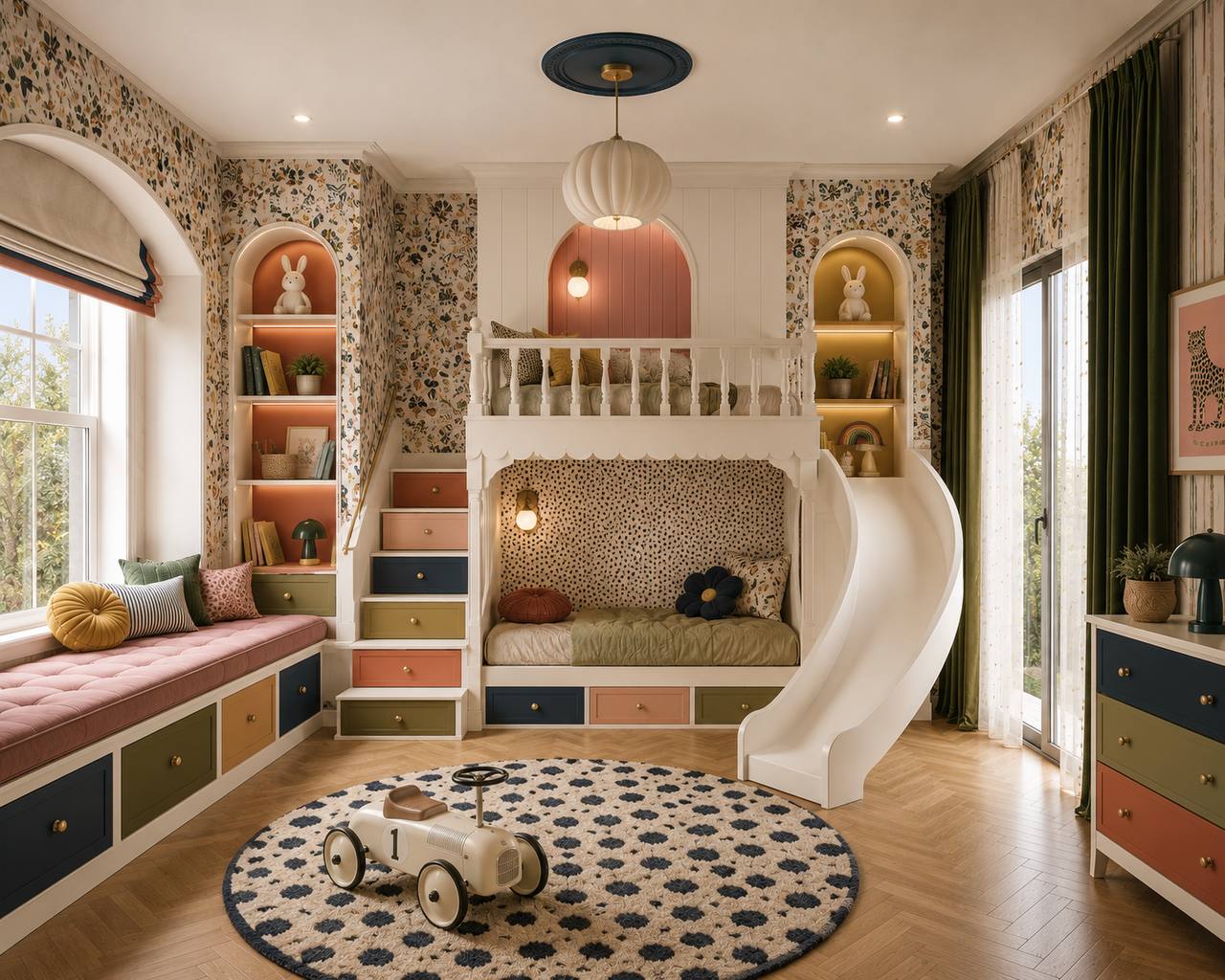
A palette guide that works for any kid
If you want a shortlist to start from, here's what I reach for and why. None of it is coded to a sex. All of it is chosen for how a child feels in the room.
| Colour | Feel | Why it works for any kid |
|---|---|---|
| Sage green | Calm, grounded | Eases eye strain, supports focus |
| Butter yellow | Cheerful, warm | Optimism without overwhelm |
| Warm terracotta | Earthy, cosy | Grounding, pairs with wood |
| Soft white + cream | Fresh, open | Reflects light, flexible base |
| Muted dusty blue | Focused, peaceful | Settling, universally soothing |
| Natural wood tones | Warm, textured | Timeless, pairs with everything |
| Rust / clay | Bold, earthy | Personality without gender codes |
The bottom line
Gender-neutral design isn't about stripping personality out of a room. It's about building a space roomy enough — literally and figuratively — for whoever your child is turning into.
The history is clear that colour-coded gender norms are newer than most people assume and rooted in retail, not biology. The research is consistent that calm, balanced palettes help kids across the board. So the real question is the one you started with: do you want a room that tells your kid who to be, or one that gives them space to figure it out?
A timber bed frame, a sage wall, a rug in butter yellow and rust, and a shelf full of the things they actually love. That's not a compromise. That's a room that works. If you're planning one, this is the kind of residential project we do all the time — book a consultation and we'll start from your real room and your real kid, not a template.
References
- Paoletti, Jo B. Pink and Blue: Telling the Boys from the Girls in America. Indiana University Press. Overview
- Szasz, George. "Blue was for girls and pink was for boys, until it wasn't." British Columbia Medical Journal, 2024. bcmj.org
- "The Impact of Colour Use in Bedrooms on Children's Psychology." International Journal of Arts, Sciences and Social Studies, 2024. ijassjournal.com
- Park et al. "Design Professionals' Viewpoint on Colour Application in Paediatric Patients' Rooms." Colour Research & Application, Wiley, 2025. onlinelibrary.wiley.com
- "Factors Influencing Children's Perception of Gender Roles." Journal of Student Research, 2022. jsr.org
- Craveiro, Joyce. "How to Design Gender-Neutral Bedrooms for Children." American Academy of Interior Design.
- "Kids Room Trends 2025." Hackrea · "How To Create A Gender-Neutral Kid's Room With Personality." The Design Files · "Kids' Bedroom Design Trends 2025." Amazing Architecture · "Gender-Neutral Kids' Room Ideas." Houzz
People also ask
- Is pink really for girls and blue for boys?
- Not by any rule older than your grandparents. Historian Jo Paoletti spent two decades tracing this and found no universal colour-to-gender coding for children until the mid-20th century. Some early-1900s guides argued the opposite, that pink (close to strong red) was for boys and soft blue for girls. The split we treat as timeless only locked in once mid-1980s prenatal testing let parents learn the sex before birth and retailers built a product market around it. It was a marketing decision, not biology.
- What is a gender-neutral kids' room?
- A room designed around the child rather than an assumed set of gendered colours and themes. In practice that usually means a calm, natural base — warm whites, soft greens, wood tones — with personality layered in through easily swapped pieces like cushions, rugs, art, and bedding. It isn't beige and it isn't boring. It's a room that doesn't tell a kid who to be and can change as they do.
- What colours work best in a gender-neutral kids' room?
- Sage and soft greens for calm and focus, warm neutrals for rest, muted or buttery yellow for gentle optimism, and a dusty muted blue for a settled feeling. Ground it with natural wood and add earthy accents like terracotta or clay. Research on children and colour points to calming, balanced tones over saturated primaries, and none of those benefits are tied to gender. Choose paint last, after your floor and larger furniture are decided.
- Does room colour actually affect children?
- The published research suggests it does, though it's a design factor, not medicine, so I'd treat it as a helpful guide rather than a prescription. Studies have linked lighter blues to a calming effect, soft greens to reduced eye strain, and warm neutrals to a restful feeling. A 2024 paper in the International Journal of Arts, Sciences and Social Studies found colour is one of the most influential elements in a child's bedroom. The consistent finding is that calm, balanced palettes help most children, regardless of sex.
- Is gender-neutral design just beige and boring?
- No, and that's the biggest misread. Neutral is the base, not the whole room. You anchor with wood and a quiet wall colour, then bring in real personality through colour and texture the child picks: a butter-yellow rug, a rust cushion, a shelf of the things they actually love. A well-built neutral room usually has more character than a themed one, because nothing is fighting the theme.
- How do I decorate a room for siblings of different genders?
- A neutral base is the practical answer. Warm neutrals and natural wood read as calm and grown-up rather than 'his side, her side,' and they let each child personalise their own zone with bedding, art, and accessories. You avoid repainting when the room changes hands or the kids swap beds, and you sidestep the whole boy-colour, girl-colour negotiation entirely.
- What furniture should I buy for a kids' room that lasts?
- Buy pieces that grow with the child. Adjustable desks, extendable or loft beds, and modular storage mean you're not redesigning every two years. A timber bed frame is the best anchor I know: natural wood pairs with any colour scheme and ages well. Put your money into the things that stay, and keep the trend-driven layer cheap and swappable.
- How should I light a child's bedroom?
- Layer it. One overhead fixture doing everything is the most common mistake. Combine ambient ceiling light, task light at the desk, a soft accent like a wall sconce or string lights, and a dimmer or nightlight for winding down. Warm bulbs help a room feel restful in the evening. And protect the natural light — a good window does more for a kids' room than almost any decor.
- Should I let my child choose their room's design?
- Yes, within a frame you set. Give them the base — the wood, the wall colour, the layout — and let them own the changeable layer: an accent colour, a rug print, the theme of their shelf. Kids are the real experts on what they like, and a room they helped shape is one they actually use. It also means the unicorn or dinosaur phase lives in the swappable pieces, not the paint.