Materials · September 17, 2026
Mushroom Furniture: What You Can Actually Buy, and What's Still a Prototype
Every design festival for five years has had a mushroom in it. Here's the honest split: one category you can specify today, one that's really a fashion material, and a pile of beautiful prototypes that aren't going in anyone's living room yet.
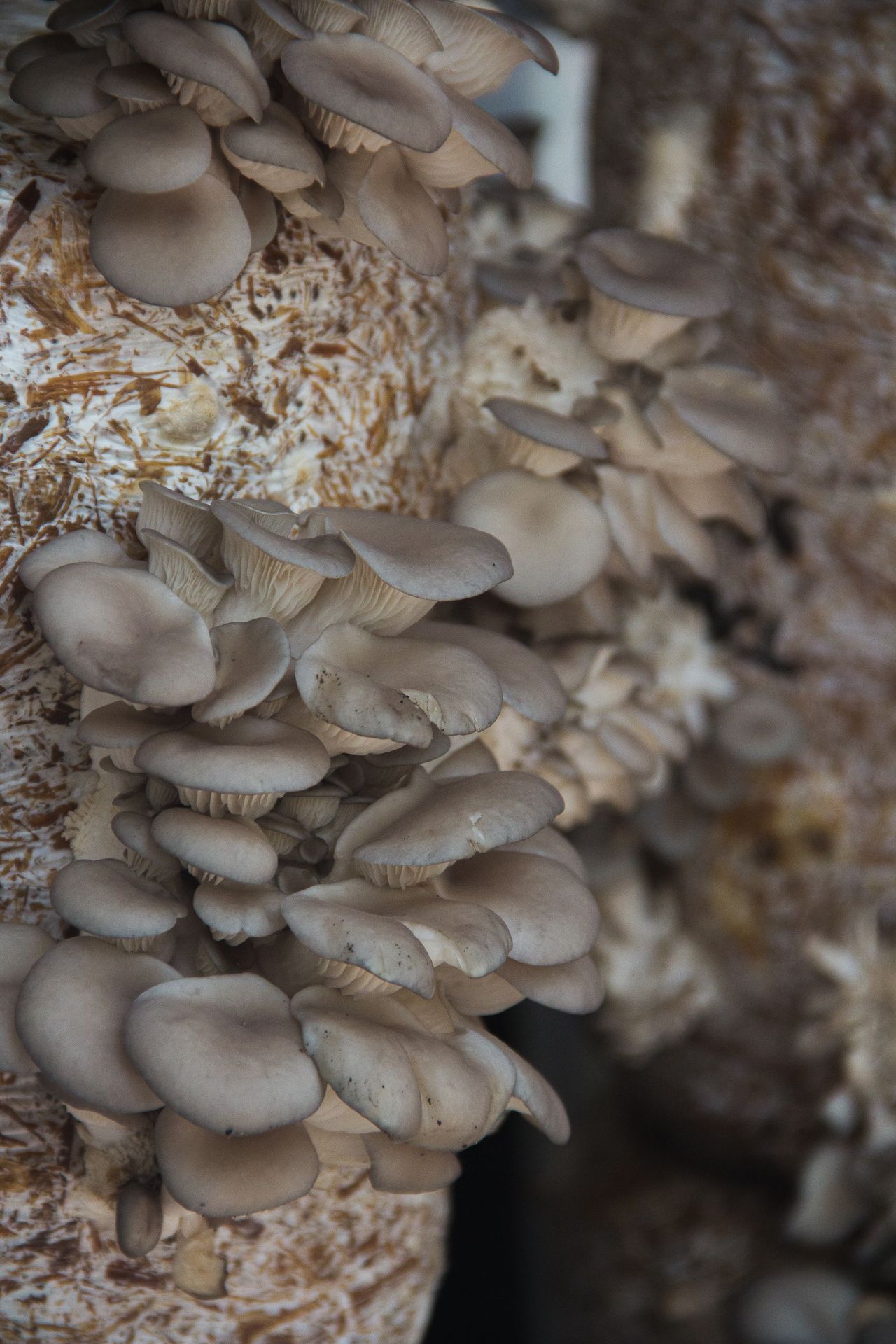
Every design festival for the past five years has had a mushroom in it somewhere. A chair grown in a mould. A brick. A lamp that looks like a lung. At some point in 2026 the question stopped being whether mycelium is interesting — it obviously is — and became whether you can put it in a client's house.
Mostly the answer is still no. There's one category where it's already yes, and it isn't the one that gets photographed.
What mycelium actually is, in a building context
Mycelium is the root network of a fungus — a dense mat of thread-like hyphae, not the cap you'd put on a pizza. Grown through a substrate of agricultural waste or textile offcuts, it knits the loose material into a single solid. Dry it and heat-treat it and the organism dies, leaving a light, foam-like composite that holds its shape.
That's the whole trick. You aren't manufacturing a material so much as farming one into a mould, which is why the environmental pitch is so strong and why the production economics are so awkward. A factory can run a press faster than a fungus can grow.
The one thing you can specify today: acoustic panels
Mogu, an Italian manufacturer, makes what are generally credited as the first commercially available mycelium acoustic panels — grown entirely from fungal mycelium and upcycled textile residues, and aimed squarely at restaurants, offices, and retail interiors with long reverberation times. Impact Acoustic is working the same category. Ecovative, the longest-running name in the field, went a different route: mycelium packaging and insulation as a polystyrene replacement, which is the most industrially proven use of the material and also completely invisible.
Acoustics got there first for a physical reason. The open cell structure that makes mycelium composite light also makes it good at absorbing sound, so it competes on performance rather than on virtue. That matters. A material that only wins the sustainability argument loses the specification.
I'll be straight: I haven't specified a mycelium panel on a Toronto project yet. Not because of the material — because of everything around it. European supply, long lead times, and a price that doesn't touch conventional acoustic felt for a residential media room. Before it goes in a spec, I'd want the flame-spread rating, the standard it was tested to, a written warranty, and the name of somebody in Canada who carries it. If you want the argument for why a room needs acoustic treatment at all, that's a whole piece on its own.
Mushroom leather is real — and it's mostly a fashion material
MycoWorks grows Reishi, a leather-alternative sheet material, from mycelium. It's genuinely good: soft hand, irregular grain, none of the plastic tell of a polyurethane substitute.
Studio TOOJ, a Stockholm studio, built its DUK series around it — a wall-mounted corner table, a side table, and a pedestal, sculpted in wood and then upholstered in Reishi, launched at Milan Design Week in 2025. They're beautiful, and they're the clearest illustration of the material's actual position. Reishi is a surface. The wood underneath is still doing the structural work. Nobody has grown a load-bearing chair.
For a home, that means mushroom leather behaves like any other specialty upholstery: a dining chair seat, a headboard panel, a bench top. Priced accordingly, which is to say not cheaply.
Still a prototype, and that's fine
Dezeen reported in August 2026 on a dress made of living mycelium that renews and repairs itself — the material kept alive rather than killed, responding to its environment. It's the most genuinely startling thing I've seen in the field, and it is nowhere near a sofa.
The rest of the prototype shelf is similarly wonderful and similarly distant. A Danish duo mixing seaweed with paper to make furniture. The French collective hors-studio working with byssus, the natural fibre a mollusc secretes to anchor itself. Eames chairs reupholstered in a denim-mycelium hybrid at a New York biomaterials show, and mycelium fibre suspended in an acrylic coffee table.
Worth noticing what London Design Festival picked for its 2026 landmark, by the way: not mycelium. Bamboo — the biomaterial that already scales, already has engineering data, and already holds up a building. I wrote about the rest of that programme in the LDF 2026 piece.
The honest problem is cost and scale
Every serious review of mycelium composites lands in the same place. The material isn't cost-competitive with the plastics and foams it would replace, and there's no clear pathway yet for scaling production to the volumes that would close the gap. That's it. That's the whole bottleneck — not performance, not aesthetics, not client appetite.
Which means the honest forecast is boring. Mycelium stays in acoustics, packaging, insulation, and exhibitions for the next few years. It shows up in your house as a wall panel or a seat pad, not as a sofa frame or a countertop. Anyone telling you otherwise is selling a render.
What I'd actually put in a Toronto home this year
Cork. Wool. Linen. Hemp. Lime plaster. Reclaimed and FSC-certified timber. Stone offcuts from a fabricator's remnant pile, which is the cheapest sustainability move in the business and nobody does it.
None of that will trend. All of it is available through trade suppliers and fabricators in the Castlefield design district, all of it has decades of installed performance behind it, and every one of those materials answers the real sustainability question — which is not where a thing came from but how long it stays out of a landfill. A well-made oak cabinet that lasts thirty years beats a mycelium panel that gets replaced twice.
If you want one genuinely forward move, make it the media room ceiling. That's the room where acoustic panelling earns its keep on performance alone, where a long lead time doesn't hold up the rest of the project, and where nobody is going to spill wine on it.
Six questions to ask any biomaterial supplier
- What's the binder? Some composites are pure grown material; others are held together with something conventional. The answer changes the environmental claim entirely.
- What's the flame-spread rating, and which standard was it tested to? Ask for the test report, not the marketing sheet.
- How does it behave at 60% relative humidity, and at 20%? Toronto swings through both every year.
- What's the warranty, and what's the expected indoor service life? If nobody will put a number on it, that is the number.
- Who carries it in Canada, and what's the real lead time? Twelve weeks from Milan is a schedule problem, not a detail.
- What happens at end of life? Compostable in an industrial facility is a different claim from compostable in your green bin.
I'd rather a client spend on a material that will still be there in 2046 than on one that photographs well in 2026. If you're planning a project and want the sustainability questions answered with actual product names and actual lead times, residential interior design covers the specification end to end, or book a consultation and bring the samples you've been sent.
People also ask
- Can you actually buy mycelium furniture in 2026?
- Barely, and mostly not as furniture. The one product category that's genuinely commercial is acoustic panelling — Mogu in Italy sells mycelium acoustic panels grown on upcycled textile residues, aimed at restaurants, offices, and retail spaces with long reverberation times. Mycelium-based furniture exists, but as gallery-priced limited pieces rather than anything you can order from a showroom floor.
- What is mushroom leather?
- A leather-alternative sheet material grown from fungal mycelium rather than tanned from hide. MycoWorks' Reishi is the best-known version. It's a surface material with a soft, irregular hand, used for upholstery and small goods — Stockholm's Studio TOOJ upholstered its DUK series of wood tables and pedestals in it, launched at Milan Design Week in 2025. It is not a structural material and it doesn't replace a frame.
- Are mycelium acoustic panels worth specifying?
- In the right room, yes. Mycelium composites have an open cell structure that absorbs sound well, which is why acoustics is the category where the material got commercial first rather than last. The catch is practical, not technical: European supply, long lead times, and a price that doesn't yet compete with conventional acoustic felt. Ask the supplier for the flame-spread rating and the standard it was tested to before anyone writes it into a spec.
- Will mycelium furniture rot or grow mould in my home?
- Finished mycelium composites are dried and heat-treated, which kills the organism and stops further growth — the panel on your wall is not alive. Like any porous natural material, though, it doesn't belong in a wet area, and it will behave badly if it's left damp. Treat it the way you'd treat wool felt or untreated cork, and ask the manufacturer for their humidity guidance in writing.
- Why are biomaterials still so expensive?
- Scale. Review after review of mycelium composites lands on the same barrier: the material isn't cost-competitive with the plastics and foams it replaces, and there's no clear route yet to scaling production up to the volumes that would fix that. Until a manufacturer solves the throughput problem, the material stays in acoustics, packaging, insulation, and exhibition work.
- What sustainable materials can I actually specify in Canada right now?
- Cork, wool, linen, hemp, lime plaster, reclaimed and FSC-certified timber, and stone offcuts. None of them will trend on a design blog, all of them are available through Toronto fabricators and trade suppliers, and every one has decades of installed performance behind it. The most sustainable specification is usually the one that lasts twenty years rather than the one with the best origin story.