AI & Tools · June 27, 2026
AI Interior Design in 2026: The Tools, Trends, and Moves I Actually Use
Which AI design tools earn their place, what's genuinely changing in 2026, where I find real inspiration, and the traps I keep pulling clients out of. No affiliate links, no filler.
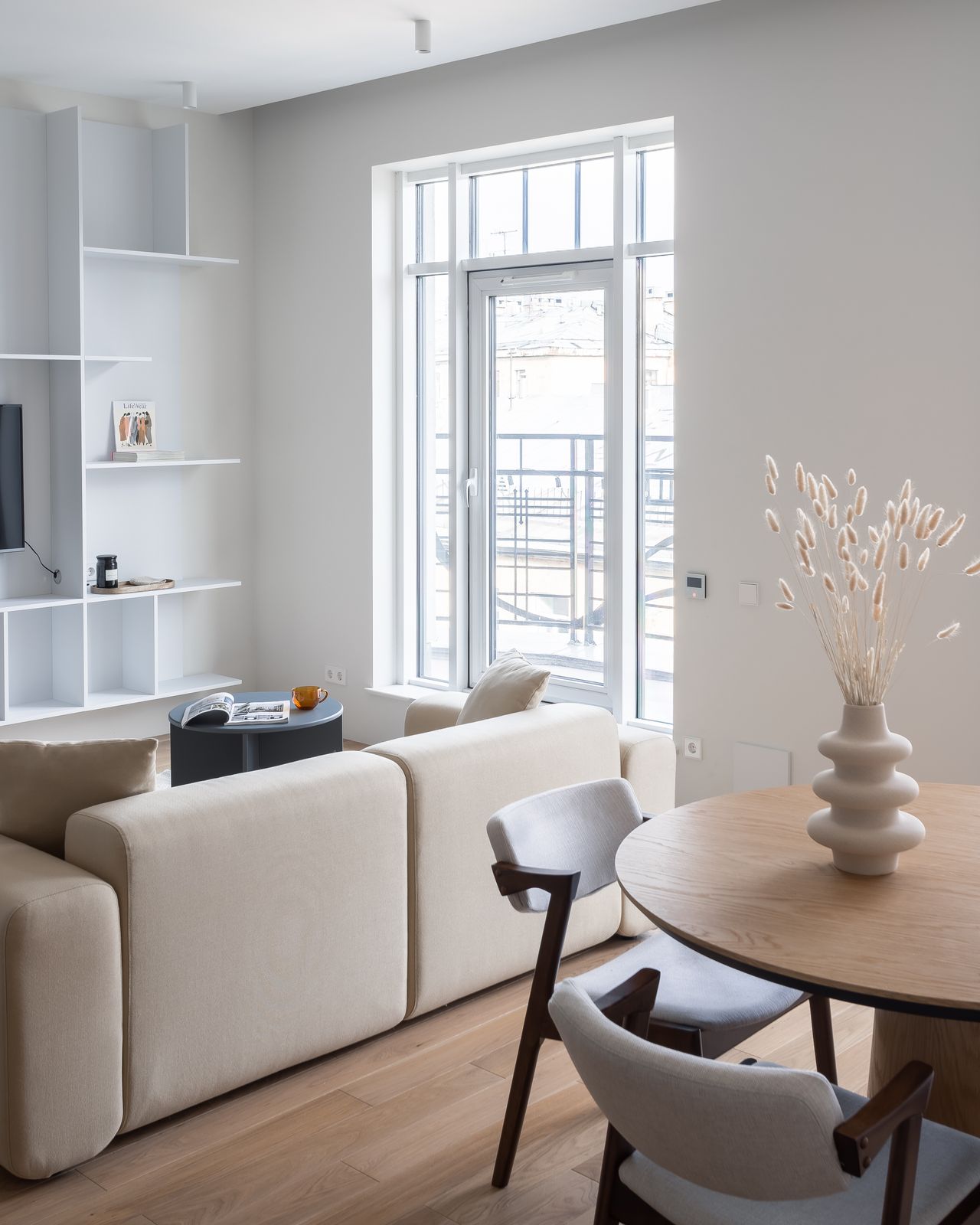
You uploaded a photo of your living room to some AI app, picked "modern," and got back a render that looked incredible. Then you tried to actually build it and realised half the furniture doesn't exist, the proportions are wrong, and the "marble" is a texture that no real slab has ever worn.
I've watched this happen to a lot of homeowners over the past two years. The renders are seductive. The gap between a render and a buildable room is where most people get stuck.
No affiliate links. No "10 best" filler. Just what I'd tell you over coffee if you asked.
What AI is actually good at in interior design
Let me set expectations, because the marketing won't.
AI is very good at one thing: showing you a feeling, fast. You have a beige builder-grade box and you can't picture it warm and layered? AI will show you ten versions in ninety seconds. That's real value. It collapses the "I can't visualise it" problem that used to need a mood board and a week of back-and-forth.
AI is bad at the part you're actually paying for. It doesn't know your ceiling is 7'9" and your radiator sits exactly where the render put a console. It doesn't know that the sofa it drew costs $14,000 and ships in 22 weeks, or that the "warm oak floor" clashes with the cabinet undertone you already committed to. It hallucinates hardware. It draws windows that violate egress code. It has no idea your toddler exists.
So here's the line I draw, and I'd hand it to any homeowner:
- Use AI for direction. Style, mood, colour temperature, rough furniture massing.
- Don't use AI for decisions. Exact pieces, dimensions, materials you'll order, anything that touches plumbing, electrical, or structure.
When I bring AI into a real project — say a layout like our Casa Lumière residence in Toronto — it's at the very front, generating quick "what if the dining zone faced the light instead" options. The moment we're choosing actual slabs and sightlines, the renders go away and real drawings take over.
If you remember one thing: an AI render is a question, not an answer. It's the start of the conversation, not the spec.
The AI tools worth your time in 2026
There are dozens now, and most are the same model with a different logo. Here's how I'd sort the ones people keep asking me about.
RoomGPT — the fastest way to "feel" a style
RoomGPT is the tool I point beginners to first. You upload a photo of a real room, pick a style, and it redesigns it in place. The strength is speed and the fact that it works from your room, not a stock one. So the proportions stay roughly believable.
Where it's weak: it leans hard on a handful of trendy looks, and it doesn't tie anything to products you can buy. Treat its output as a vibe check. I've had clients walk in with a RoomGPT image and say "this, but real," and that's a perfectly good brief. It's a terrible final plan and a great icebreaker.
Visualize AI — sketch-to-render and renovation previews
Visualize AI (the one at visualizeai.pro) sits a step up. It's stronger at turning rough sketches or empty-room photos into more controlled renders, which makes it useful when you're mid-renovation and staring at studs. One thing I appreciate: it sells credit packs outright instead of locking you into a subscription, and it gives you a few free credits to test first. Good for one-off projects where you don't want another monthly bill. If you're trying to decide whether to open a wall, seeing a plausible "after" reduces the fear. Just don't trust the structural implications it draws. It doesn't know what's load-bearing. Nothing in this category does.
A warning about AI-render galleries and "design blog" content farms
Search any trend and you'll land on a swarm of AI-render galleries and auto-generated "design blogs" with names like designmode24, drhomey, bloomingdwelling, or verdantnaturehome. People ask me if these are real tools or trustworthy sources. They're neither. I opened a batch of them while writing this. Most are content farms: no named author, no budgets, no materials, the same AI image recycled with a keyword-stuffed caption, and a few padded out with gambling and crypto links. One didn't even hold a valid security certificate.
So my filter is blunt: does the site show the same room from more than one angle, and does it ever talk about budget or what something is made of? If every image is a single hero shot with no specifics, it's eye candy, not guidance. Save the screenshot if it sparks something. Ignore the caption. And don't hand any of them your email.
General image models (the ones you already have)
Honestly, a lot of my "AI interior design" now happens in general-purpose image and chat models, not dedicated apps. They're more flexible for prompting a specific mood and they don't push you toward the same five trendy styles. The trade-off is they're worse at keeping your actual room's geometry. Pick your poison: dedicated apps keep your walls, general models keep your taste.
So what's the best AI for interior design?
People want one answer. The honest one: there isn't a single best, there's a best for the job.
- Want a quick restyle of a room you already have? RoomGPT.
- Mid-renovation, working from sketches or empty space? Visualize AI.
- Chasing a very specific mood with no constraints? A general image model.
- Want it to actually be buildable and on budget? A human. Still. In 2026. That part hasn't changed, and I'd be lying if I said it had.
Interior design trends I'm seeing in 2026
I'm wary of "trend" lists because most of them are written by people who don't have to live in the rooms. So here's what's actually showing up in my projects and at the shows this year, plus my opinion on what's worth following and what's a trap.
Warm minimalism finally beat cold minimalism
The grey, white, and chrome era is over, and good riddance. What's replacing it is minimal but warm: plaster and limewash walls, oak and walnut, bouclé and wool, brass instead of chrome. Same restraint, completely different temperature. Our Maison Verte project leans this way and it's the look I get asked for most in 2026.
If I were redoing a room this year, I'd start with the walls. A limewash or a warm off-white with a hint of pink or yellow undertone changes everything before you spend a dollar on furniture.
Texture is doing the work that colour used to
Because palettes have gone quiet, texture carries the room now. Reeded wood, fluted glass, raw plaster, heavy linen, stone with a honed (not polished) finish. A monochrome room reads rich when five textures are fighting for your hand, and flat when it's all one smooth surface. This is the single cheapest upgrade for most rooms and almost nobody does it deliberately.
Curves, but please stop with the blob sofa
Soft, curved forms are still everywhere — arched doorways, rounded sofas, kidney coffee tables. I like curves. What I'd avoid is the giant marshmallow "cloud" sofa that every render spits out. They photograph beautifully and they're uncomfortable, they pill, and they date fast. Buy one curved hero piece. Don't curve the whole room.
Quiet, characterful colour
Beige isn't dead but it got interesting. Olive, clay, ochre, oxblood, deep teal, mushroom, warm chocolate brown. Used as a grounding element, not a feature-wall stunt. Here's a tell for 2026: the big colour authorities didn't agree. Benjamin Moore named a charcoal-brown (Silhouette AF-655), Sherwin-Williams a warm khaki (Universal Khaki SW 6150), and Pantone went the other way entirely with a plain white (Cloud Dancer, its first-ever white). I don't chase any single one of these. When they split like this, I read the overlap — most leaned warm and grounded — and treat the white as the "blank canvas" exception. My take: warm, earthy, lived-in colour wins the year in real homes.
Sustainability that's real, not a sticker
Clients ask for "sustainable" and often mean "looks natural." The version I actually respect: buying fewer, better pieces; vintage and reclaimed over fast furniture; natural fibres over synthetic; and choosing finishes that can be repaired instead of replaced. The most sustainable sofa is the well-made one you keep for fifteen years. If you want to go deeper, the resources from groups like the International Living Future Institute and your local materials reuse centres are more honest than most brand marketing.
AI-influenced "maximalism" — handle with care
There's a strange feedback loop happening. AI tools love drama, so they over-produce: gallery walls, layered rugs, a hundred objects. People copy the renders, and suddenly everyone wants a "curated clutter" look. Done with a real eye it's wonderful. Done by copying a render it's just expensive noise. Edit ruthlessly.
Where I get real inspiration
AI is for speed. Inspiration still comes from people with taste and a point of view. Here's where I actually look.
The blogs that still earn their spot
Emily Henderson's blog is the one I recommend to clients without hesitation. It's opinionated, it shows real budgets and real mistakes, and it talks about why a room works, not just what's in it. That "here's what went wrong and here's the fix" honesty is worth more than a thousand pretty grids. A handful of other long-running design blogs do the same thing. The test is always the same: do they admit when something didn't work?
Interior design news — read it for the why, not the what
The design press (the major shelter and architecture magazines, plus the trade outlets) is useful less for "what's new" and more for spotting the direction before it floods the mass market. When the same material or silhouette shows up in three serious publications in a season, it's about eighteen months from being everywhere. For 2026, Dezeen framed the mood as "curated calm over superficial opulence," which matches what I'm seeing on the ground. For the Canadian angle I read Azure. That lead time is the whole point of reading design news.
The Toronto Interior Design Show
If you're anywhere near the GTA, the Interior Design Show is the single best day you can spend. IDS Toronto 2026 ran January 22–25 at the Metro Toronto Convention Centre, and it's still the clearest read on where Canadian design is heading. Walking a show beats scrolling a feed because you can touch the materials, see scale in person, and watch which booths actually draw a crowd. I treat it as a temperature reading. This year the warm-natural-materials direction was everywhere, the emerging-designer sections (Studio North and Prototype) were the most interesting part of the floor as usual, and Yves Béhar's rounded "Peaks" sofa for Moooi summed up the curved-form trend in a single piece. Go next January with a notebook, not just a phone.
The new wave of niche design "blogs" (be careful here)
Beyond the established names there's now a flood of auto-generated design blogs and AI galleries. When I actually opened a batch of the ones that rank for trend searches, most failed the basic test: no named author, no budgets, no materials, recycled AI images, and a few stuffed with gambling and crypto links. New and unknown isn't the problem. No accountable human behind the page is. If a small blog passes my filter (multiple angles, a real opinion, some mention of cost or material) it earns a spot in my saved folder. Most don't even come close.
And honestly — look at finished work, including mine
Renders lie. Finished projects don't. When you're trying to decide if a studio can actually build the thing, look at their completed rooms, not their renders. That's why our whole project portfolio is real photography of built spaces — like the Atelier Nord studio in Los Angeles and the Hotel Marbré hospitality fit-out. Hold any designer to that standard, us included.
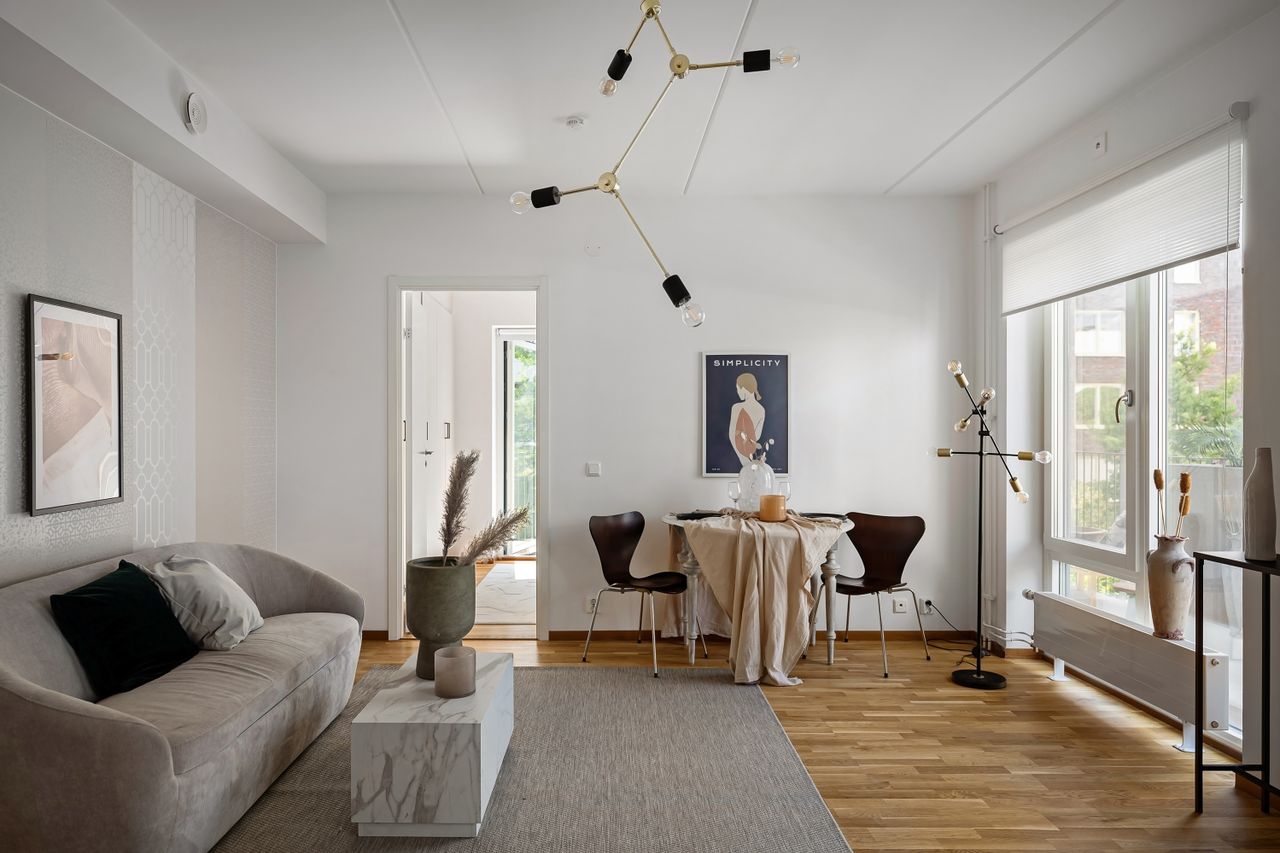
How to plan a room without hiring anyone yet
Plenty of people aren't ready for a designer. Good — you shouldn't hire one until you've done the cheap homework. Here's the sequence I'd give a friend.
Start with the boring measurements
Before any app, measure the room. Length, width, ceiling height, window positions, door swings, where the outlets and vents are. Most "AI design fails" are really "I never measured" fails. A free room planner or a sheet of graph paper beats a beautiful render every time, because it's true.
Use the games and planners as a sandbox
This is where "interior design games" earn a real mention. Apps like the popular design-and-decorate mobile games, and full 3D builders like the house-flipping simulators, are genuinely useful for one thing: teaching you scale and adjacency with zero stakes. You learn fast that a king bed eats a small room, that a walkway needs at least 90 cm, that an island wants clearance on all sides. It's play, but the spatial lessons transfer. I tell beginners to mess around in one for an evening before they spend on furniture.
Then bring in the AI for mood
Now — and only now — open RoomGPT or Visualize AI. Feed it your real, measured room. Generate a few directions. Pull out the two or three you keep coming back to and save the specific elements you like: that floor, that wall colour, that lighting feel. You're building a brief, not a shopping list.
Pressure-test against real life
Before you buy anything, ask the unsexy questions. Who uses this room and when? What gets spilled on it? What do you already own that has to stay? A plan that ignores your actual life is just decoration. This is the exact filter a good designer applies, and you can apply it yourself for free.
If after all that you're in over your head — layout's not working, the budget keeps blowing up, you've returned the same lamp three times — that's the signal to talk to someone. If you just want a second opinion without a full project, a virtual design consultation does it remotely; if the bones are right and it's only the final layer that's off, that's styling and décor. When you're there, book a consultation and bring your measurements, your saved images, and your real budget. The homework makes the paid help cheaper, because we skip straight to decisions.
The mistakes I see most often
I could write a book. Here are the ones that cost the most money and are the easiest to avoid.
Buying from the render. Someone falls for an AI image and orders pieces to match. The pieces arrive, the scale is wrong, the colours don't read the same in their light, and now there's $6,000 of furniture that has to go back. The render had no idea what your room's light does at 4pm. Yours does.
Lighting as an afterthought. Nearly every room I'm called in to rescue has one sad ceiling fixture doing all the work. Layer it: ambient, task, and accent. Put the overheads and the lamps on dimmers. Warm bulbs (around 2700K) in living spaces. This one change rescues more rooms than any furniture purchase.
Pushing all the furniture against the walls. It makes a room feel smaller, not bigger. Floating a sofa even 20 cm off the wall, with a console or a rug anchoring it, reads far more intentional. People don't believe me until they see it.
The rug that's too small. A postage-stamp rug under a coffee table makes the whole room look like it's wearing shoes two sizes too small. Front legs of the seating should sit on the rug, minimum. Go bigger than feels right. You won't regret it.
Picking paint first. Paint is the cheapest, most flexible element in the room, so choose it last. Anchor to the expensive, fixed things — the floor, the stone, the big upholstered pieces — and match paint to them. People do it backwards constantly.
Skipping the budget conversation with yourself. AI tools and games make everything feel free, so people start designing a champagne room on a beer budget and get crushed when reality arrives. Decide the number first. Design to it second.
What I think happens next
A few predictions, and I'm happy to be quoted on them later.
AI renders will get good enough that the "looks amazing, can't build it" gap finally closes for simple rooms. Within a couple of years I expect tools that tie a render to real, in-stock, in-budget products at your actual dimensions. That's the holy grail and it's close. When it lands, the basic restyle job — repaint, re-furnish a standard room — partly automates. That's fine. It was never the interesting work.
What won't automate: anything with constraints. Real layouts, heritage homes, awkward footprints, structural changes, the negotiation between what you want and what your space and budget allow. That's judgement, and judgement is the job. The designers who thrive will be the ones who use AI to skip the busywork and spend more time on the hard calls.
I also think the flood of AI-generated design content makes genuine taste more valuable, not less. When everyone can produce a pretty render, the rare thing is knowing which one is actually right for you. That's been the job since 2014. The tools changed. The job didn't.
If you're renovating or furnishing this year, my advice is simple: play with the AI, steal the direction it gives you, measure your real room, and spend your money on the few things that are hard to change. And when you're stuck, ask a person. Preferably one who shows you finished rooms, not renders.
People also ask
- What is the best AI tool for interior design in 2026?
- There's no single best — it depends on the job. RoomGPT is the easiest for restyling a room you already have, Visualize AI is stronger for renovation previews and sketch-to-render, and general image models give you the most creative control with the least respect for your real dimensions. For anything you'll actually build and pay for, a human designer still beats every AI tool on accuracy, budget, and buildability.
- Is RoomGPT free, and is it any good?
- RoomGPT has a free tier with limits and paid plans for more renders and higher quality. It's genuinely good for one thing: quickly showing you a style applied to your own room. It's not good for choosing real furniture, getting dimensions right, or planning anything structural. Use it to find a direction, then verify everything in the real world.
- Can AI replace an interior designer?
- Not in 2026. AI can replace the mood-board stage and speed up early visualisation. It can't measure your room, respect your budget, source real products, handle plumbing or electrical or structure, or make the judgement calls that come from constraints. The realistic picture is AI handling the busywork while designers spend more time on the decisions that actually matter.
- How much does interior design cost?
- It ranges widely by scope and city. Some designers charge a flat fee per room, others bill hourly, and full-service projects are often a percentage of the overall budget. The bigger cost is usually the furnishings and the work itself, not the design fee. The cheapest way to control it is to set your total budget before you start and design to that number rather than discovering it at the end.
- What are the biggest interior design trends for 2026?
- Warm minimalism — quiet palettes with rich texture — is the dominant direction, replacing the cold grey era. Expect plaster and limewash walls, oak and walnut, brass over chrome, honed stone, and earthy, characterful colour like olive, clay, and oxblood used as grounding tones. Curves continue, genuine sustainability grows, and natural materials are everywhere, including at the Toronto Interior Design Show.
- What colours are in for interior design in 2026?
- Warm, earthy, and slightly muted: olive, clay, ochre, mushroom, deep teal, oxblood, and warm chocolate browns, anchored by warm off-whites rather than stark cool whites. The 2026 colour authorities actually split — Benjamin Moore chose a charcoal-brown (Silhouette AF-655), Sherwin-Williams a warm khaki (Universal Khaki SW 6150), and Pantone its first-ever white (Cloud Dancer). I read the overlap rather than any single pick, and most leaned warm and grounded. Choose paint last, after your floor and large furniture are decided.
- How do I plan a room layout for free?
- Measure the room first: length, width, ceiling height, window and door positions, outlets, and vents. Then use a free room planner, graph paper, or even a design game to test furniture placement and walkways at scale. Bring AI tools in afterward, just for mood. The order matters — measurements before renders prevents almost every common fit mistake.
- Are interior design games actually useful for learning design?
- Surprisingly, yes — for one specific thing. Decorating games and 3D house-builder simulators teach scale, proportion, and adjacency with no real-world cost. You learn fast how much space a bed or island really needs and how walkways work. They won't teach taste or material knowledge, but as a free sandbox before you spend money, an evening with one is time well spent.
- What's the most common mistake homeowners make?
- Buying from a render or a single inspiration image without testing it against their real room. The light is different, the scale is different, and pieces that look perfect on screen often arrive wrong. Close behind it: under-budgeting, ignoring lighting layers, choosing rugs that are too small, and pushing all the furniture against the walls. All of these are free to avoid if you slow down before you buy.
- Where can I find trustworthy interior design inspiration online?
- Look for sources that show real budgets, multiple angles of the same room, and honest talk about what went wrong. Long-running design blogs like Emily Henderson's are a strong starting point, the major design publications are good for spotting direction early, and design shows let you see materials in person. Be skeptical of AI-image-only galleries and brand-new niche blogs with no editorial point of view — pretty pictures aren't the same as guidance.
- Should I trust AI render galleries and new design blogs?
- Some are great finds, many are content farms. My filter: does the site ever show the same room from more than one angle, and does it talk about cost or what things are made of? If yes, save it. If it's a single hero shot with a vague caption, treat it as eye candy, not advice. New and unknown isn't bad — lack of a real point of view is.
- How do I work with a designer once I've done my own research?
- Come prepared. Bring your room measurements, the saved images that capture the direction you want, an honest budget, and a list of what you already own that has to stay. The homework makes the paid help faster and cheaper because you skip straight to decisions instead of starting from zero. Book a consultation and we work from your real constraints, not a render.