Trends · June 24, 2026
Interior Design Trends 2026: What I'd Actually Follow This Year
The cold grey era is finished. My honest take on what's genuinely changing in 2026 — warm minimalism, earthy colour, texture, curves done right — and the trends I'd quietly skip.
The cold grey living room is dead. I mean that almost literally: the cool-grey walls, the white quartz, the chrome legs, the single millennial-pink velvet chair for contrast. For about a decade that was the safe answer, the look you couldn't get fired for specifying. In 2026 it's the look that quietly tells everyone your renovation is older than it is.
The big shift: warm minimalism, not cold perfection
If there's one sentence that captures 2026, Dezeen put it well when they framed the year as "curated calm over superficial opulence." That matches what I'm hearing from clients almost word for word. Nobody walks into my office anymore asking for a showroom. They ask for a home that feels calm, looks intentional, and doesn't fight them when they actually live in it.
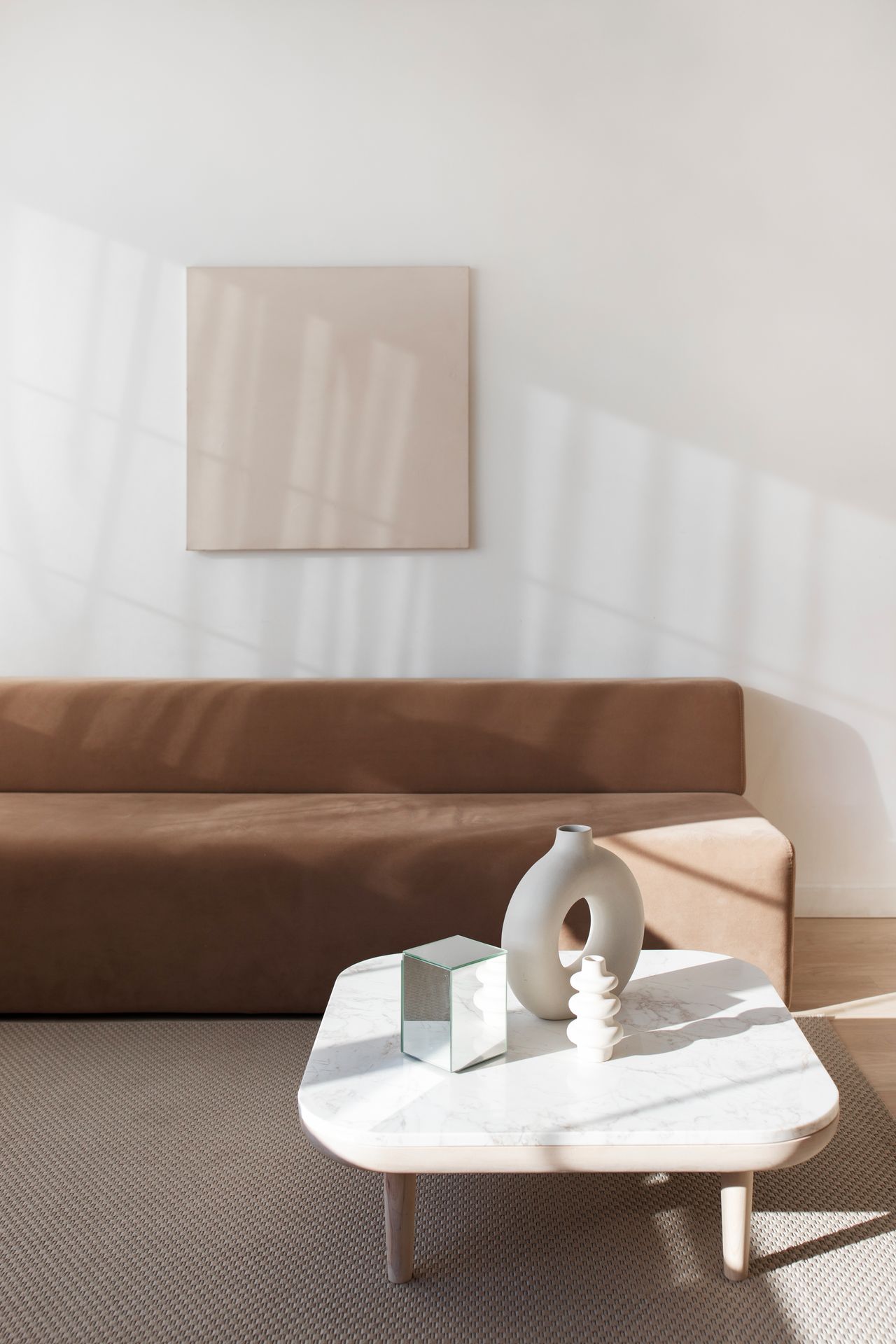
The dominant direction is warm minimalism. Keep the restraint of the minimalist years, the uncluttered surfaces and the breathing room, then swap the coldness for warmth. In practice that means plaster and limewash walls instead of flat builder white, oak and walnut instead of painted MDF, boucle and wool instead of polyester, and brass instead of chrome. The room is still quiet. It just feels like someone with a pulse lives there.
Why the grey era ended
Grey didn't fail because it was ugly. It failed because it was easy. When everyone defaults to the same safe palette, the safe palette stops feeling like a choice and starts feeling like a lack of one. Cool grey also does something unkind to light, especially in a Toronto winter when the sun is low and weak for months. Warm tones do the opposite. They make a north-facing room feel less like a meeting room and more like a place you'd want to read in.
I'm not telling you to gut a perfectly good grey kitchen. That's wasteful and it's the kind of trend-chasing I'll warn you about later. But if you're building fresh, lean warm from the start. It ages better.
Colour: earthy, grounded, and a little moody
The palette this year is warm and slightly muted. Clay and terracotta are everywhere, and for good reason: they read as warm without being loud, and they sit beautifully against natural wood and plaster. Olive and deeper greens continue. Mushroom, putty, and warm off-whites are the new neutral base, replacing the stark cool whites we all overused.
The more interesting move is the return of genuinely moody colour. I'm specifying chocolate brown, deep forest green, and a ruddy oxblood red in more projects than I have in years, usually as a grounding tone rather than an accent. A dining room in deep green with brass and walnut feels considered in a way a white one never will. On a recent project we'll publish soon, Maison Verte, the whole scheme grew out of a single olive plaster colour, and almost every other decision got easier once that anchor was set.
One rule I'll die on: choose paint last. The most common mistake I see is someone falling in love with a colour chip, painting first, then trying to find a sofa and a floor that flatter it. Backwards. Your floor and your large upholstery are harder to change and more expensive, so let them lead. Paint is the cheapest thing in the room. Make it serve everything else. I go deeper on specific colours and the 2026 forecasts in my colour trends deep-dive.
Texture is doing the heavy lifting now
Here's the thing nobody tells you about quiet palettes: when you take away bright colour, the room has to get interesting some other way, or it goes flat and cheap. The answer in 2026 is texture. This is the trend I'm most genuinely excited about because it rewards craft over shopping.
What I'm actually specifying:
- Reeded and fluted wood on cabinetry and island fronts, where the play of light does the decorating for you.
- Fluted and reeded glass for doors and partitions, which softens light and hides a messy pantry without going opaque.
- Raw or limewashed plaster walls, which give you depth and subtle movement a flat paint never can.
- Heavy linen, wool, and boucle for upholstery and drapery, because cheap thin fabric is the fastest way to make an expensive room look budget.
- Honed stone instead of polished. Honed reads as calm and modern; high-gloss polish is starting to look like 2016.
If you do one thing from this whole article, layer texture before you reach for a bold colour. A beige room with five different textures feels rich. A beige room with one texture feels like a rental.
Pattern is back, in moderation
After years of plain solids, pattern is returning, mostly florals and stripes. I like this, with a limit. Pattern works best as a supporting layer: a striped cushion, a floral on a single chair or a powder-room wall, a patterned border on drapery. When clients try to make pattern the whole identity of a room, it usually reads as busy within a year. Use it the way you'd use salt, not the way you'd use rice.
Curves and organic forms, with one honest warning
Curved, organic shapes are still going strong. Rounded sofas, arched openings, kidney-shaped coffee tables, soft-edged casegoods. The look softens a room and reads as contemporary without trying too hard. At the Toronto Interior Design Show this past January, Yves Behar's rounded "Peaks" sofa for Moooi pretty much summed up where seating is headed.
Now the warning. AI renders love an oversized rounded "cloud" or blob sofa, and a lot of people are buying them based on those images. In real life many of these pieces are a problem. They're often too soft and too deep, so you don't sit on them, you sink into them and can't get up gracefully, and they offer almost no back support. Beautiful on screen, miserable for a dinner party where you'd like to sit upright.
What I'd avoid is buying any curved sofa you haven't sat in. What usually works is a gentle curve with a real seat depth around 22 to 24 inches and an actual supportive back. Save the dramatic blob for a low lounge chair in a corner you don't use for three hours at a stretch.
Sustainability, the version that actually means something
Sustainability has been a marketing word for so long that it's easy to roll your eyes at it. The version worth your attention in 2026 isn't a label on a product. It's a way of buying. Fewer things, better made. Vintage and reclaimed over new. Natural fibres over synthetics. Finishes you can repair instead of replace.
A solid oak table you can sand and re-oil for forty years is a sustainability decision, even if nothing about it is marketed that way. A cheap veneer table that chips and heads to landfill in five years is the opposite, no matter how many green leaves are on the tag. In my experience the most sustainable thing most people can do is simply buy less and wait for the right piece. Vintage also solves a design problem for free: it keeps a room from reading like one trip to one store, which is exactly the flat, instant look I'm always trying to avoid.
If you want to go past good intentions into real standards, the International Living Future Institute at living-future.org is a credible place to start. Just be alert to greenwashing along the way. "Recycled content" with no number attached tells you almost nothing.
How this plays out room by room
Kitchens
The all-white kitchen is giving way to wood-toned and warm-coloured cabinetry, often with a stained oak island against quieter perimeter units. Honed stone or warm quartzite counters, brass or aged-bronze hardware, and at least one reeded or fluted detail. The trade-off to know: real wood and honed stone need a little more care than the bulletproof white-and-quartz combo. For most clients the warmth is worth the upkeep, but if your kitchen takes a beating, be honest about that before you commit.
Living rooms
This is where warm minimalism shows best. A grounded sofa in heavy fabric, a curved chair, a plaster or limewashed wall, layered lighting that does not rely on a single ceiling fixture, and a properly sized rug. The rug is the one I keep fixing: too small is the most common error in any living room, full stop. Your front sofa legs should sit on it. You can see the principle in projects like Casa Lumiere, where the whole room is built from texture and warm neutrals rather than colour.
Bedrooms
Calm, textural, and a little darker than we'd have gone five years ago. Moody walls work beautifully in bedrooms because you mostly use them at night. This is also where one of the year's emerging ideas lives: canopy and four-poster beds are coming back. I'd call that emerging rather than established, so treat it as a fun bet, not a safe one.
What I'd skip, and the one real trap
A few specific things I'd let pass this year. The single dramatic feature wall meant to carry an otherwise plain room almost always looks like a stunt; spread that energy across the whole space instead. The ultra-soft blob sofa, already covered. And the all-from-one-render room, where someone buys an entire AI image and discovers the proportions and the light don't survive contact with reality.
I'd also flag two emerging trends as single-source bets rather than sure things: modular, reconfigurable lighting systems, and the AI-influenced "curated clutter" maximalism that's bubbling up online. Both are interesting. Neither is proven to age well, so I wouldn't build a whole room around them yet.
The real trap, though, is trend-chasing itself. The whole point of knowing the trends is so you can choose which ones serve how you actually live and ignore the rest. Spend your budget on the permanent layer, the floors and sofa and cabinetry, in quiet, well-made forms. Bring trends in through the cheap, swappable layer: paint, textiles, lighting, accessories. Do that and you can update your home every few years for the price of a long weekend instead of a renovation.
If you want the budget side of this — which of it I'd call a 10-year investment versus a cheap swap, room by room, in real Canadian dollars — I broke that down separately in what's actually worth the investment.
Where I think this goes
My prediction: the warm, natural-materials direction has years left in it, because it's a correction toward how people genuinely want to feel at home, not a novelty. What I expect to fade faster is the extreme version of curves and the louder maximalist clutter, the parts of 2026 that photograph better than they live. The pieces that survive will be the boring, honest ones: a good oak table, a sofa you can actually sit on, a wall with some texture and a colour that flatters your light.
If you want a second set of eyes before you commit money to any of this, that's exactly the kind of thing we do. Have a look through the studio portfolio to see how these ideas land in real homes, and when you're ready, book a consultation and we'll work from your actual room and budget. For more on this year's direction in person, I also wrote up the Toronto Interior Design Show recap.
People also ask
- What are the biggest interior design trends for 2026?
- Warm minimalism leads: quiet, earthy palettes carried by texture rather than colour. Think plaster and limewash walls, oak and walnut, brass over chrome, boucle and heavy linen, and honed stone. Curved, organic forms continue, earthy and moody colour like clay and deep green grows, and real sustainability matters more. Dezeen summed the mood up as curated calm over superficial opulence, which matches what I see in actual projects.
- Is grey still in style for 2026?
- The cool grey-and-chrome era is genuinely over. Stark cool greys, glossy white, and silver hardware now read as dated to most clients I work with. That doesn't mean you rip everything out. Warm, complex greys and greige still work as supporting tones. What's gone is the all-grey scheme as a default. If you're building fresh, lean warm: putty, mushroom, warm off-white, and brass instead of chrome.
- What colours are trending in interior design in 2026?
- Warm and earthy: clay, terracotta, ochre, olive and deeper greens, mushroom, and warm off-whites as the base. Moodier accents are having a moment too, like chocolate brown, deep forest green, and a ruddy oxblood red. The common thread is warmth and a slightly muted, lived-in quality rather than bright saturation. I always tell clients to choose paint last, after the floor and the big furniture are settled.
- Is minimalism over in 2026?
- Cold, empty minimalism is fading, but minimalism itself isn't dead — it grew up. The current version is warm minimalism: still calm and uncluttered, but built from natural materials, real texture, and a few characterful pieces instead of bare white boxes. You keep the restraint and add warmth. For most homes that balance is more livable than either stark minimalism or full maximalism.
- Are curved sofas still in for 2026?
- Curved and rounded forms are still strong, and they showed up clearly at the Toronto Interior Design Show in January. The caution is comfort. A lot of the cloud and blob sofas that look stunning in renders are shallow, soft to the point of swallowing you, and hard to sit upright in. Try before you buy, check the seat depth and back support, and favour a gentle curve over an extreme one if the piece gets daily use.
- What materials are popular in 2026 interior design?
- Texture is doing the heavy lifting now that palettes are quiet. I'm specifying reeded and fluted wood, fluted glass, raw and limewashed plaster, heavy linen, wool and boucle, and honed rather than polished stone. Oak and walnut dominate over painted finishes, and brass has largely replaced chrome. The goal is a room that's interesting to touch and look at even when the colours stay calm.
- How do I follow trends without my home looking dated quickly?
- Spend big on the things that stay and treat trends as the cheap, swappable layer. Floors, sofas, cabinetry, and stone should be quiet and well made. Bring the trend in through paint, textiles, lighting, and accessories you can change in a weekend. Buy fewer, better pieces, mix in vintage so the room doesn't read as one shopping trip, and skip anything you only like because it's everywhere this year.
- Is sustainable interior design actually a trend in 2026?
- It's becoming a real practice rather than a label. The meaningful version is buying fewer and better things, choosing vintage and reclaimed, using natural fibres, and picking finishes you can repair instead of replace. Solid wood you can refinish beats a veneer that chips and goes to landfill. For deeper standards, the International Living Future Institute at living-future.org is a credible resource. Be wary of greenwashing, since a recycled label alone means little.
- What interior design trends should I skip in 2026?
- I'd skip the single dramatic feature wall meant to do all the work, ultra-soft blob sofas that look better than they sit, and buying a whole room from one render. I'm also cautious about emerging ideas like canopy beds and AI-style curated clutter maximalism, which are fun but not yet proven to age well. Trend-chasing in general is the real trap. Start from how you live, not from what's viral.